Flowers are the part of a wedding guests remember without being able to explain why. They set the temperature of a room before anyone sits down, carry the colour story into every photograph, and are the first thing a bride sees as she reaches the door. Which is why the floral brief has quietly become one of the most argued over items on the list.
The direction for 2027 is clear from the florists already booked for next season. Restraint is in, but so is courage. Couples are spending less on volume and more on intention, and the results photograph better than the crowded centrepieces of a few years ago. Our wedding planning tools on Zothey are a sensible place to start a shortlist.
The five shifts florists are designing around
These are less passing fashions than a change in how couples think about flowers. Each asks something different of your budget and your venue.
Braver colour pairings
Colour has returned, and the interesting part is the pairings. Baby blue against burgundy, butter yellow against chocolate brown, combinations that felt reckless two seasons ago. The couples who make it work commit fully, letting the pairing travel through stationery, tables and the wedding party’s outfits rather than stopping at the bouquet.
Commitment is the whole trick. A bold pairing used in one place looks like a mistake, and the same pairing repeated across the day looks deliberate. If you are nervous, test it on the save the dates first.
Sculptural minimalism and the single stem
The big mixed arrangement is giving way to restraint. Florists describe a move towards single stem moments and minimal, sculptural work where every flower earns its place. It reads almost like a gallery hang: fewer elements, perfectly placed, letting the stem do the work.
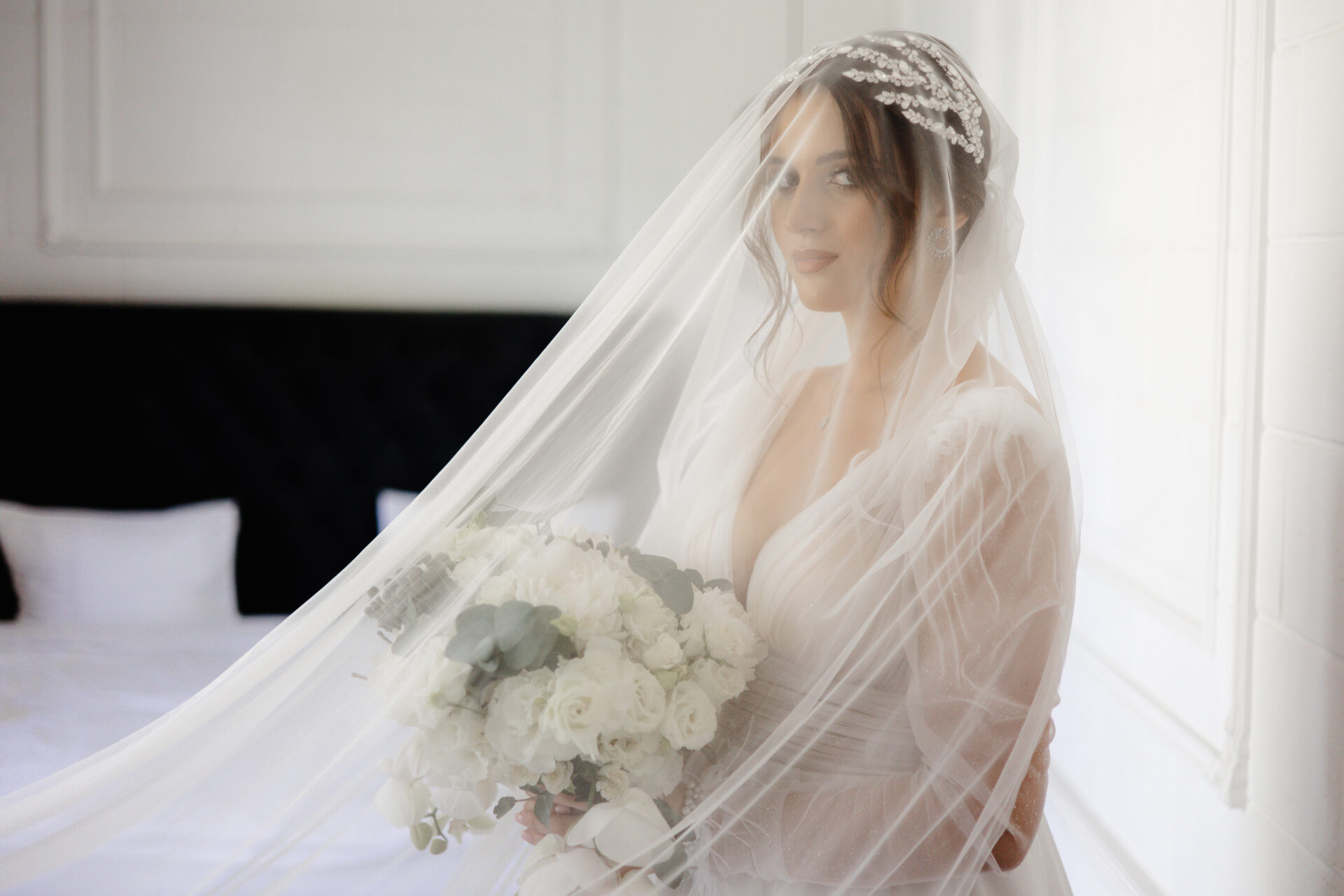
For a bride this is good news twice over. Fewer stems means better flowers for the same money, and a quiet arrangement does not compete with a dress. If you are wearing something with real structure, such as a handmade to order piece from Velo Bianco, the flowers should support the silhouette.
One hero moment instead of thirty arrangements
Instead of spreading the budget across thirty identical table pieces, couples are buying one artistic moment that carries the room. Usually that means a sculptural focal point at the ceremony backdrop, the entrance, or the table where the cake is cut.
It has to work in the room and through a lens, because the focal point is the shot everyone shares. Talk to your florist and venue stylist together, and browse the wedding vendors listed on Zothey before you book, so flowers, staging and lighting are planned as one design.
Fabric and flowers designed together
Draping has come down from the ceiling onto the tables, and flowers are designed with fabric rather than beside it. Stems are threaded through folds, arrangements built around a drape, and the cloth stops being a backdrop and becomes part of the design.
If your venue has strong textiles, raise it early. Brides has tracked the same move towards softer, layered tablescapes, and it remains one of the cheaper ways to make a plain room feel dressed.
Making a floral idea work in your venue
Every trend above falls apart in the wrong room. The venue decides more about your flowers than any mood board does.
Start with the room, not the mood board
Photographs of other people’s weddings are a dangerous starting point. Look at your own venue first: ceiling height, the light, the wall colour, and whether there is anywhere for a tall arrangement to stand without blocking a sightline.
A low ceiling kills a cascading installation, and a dark room swallows pale flowers after six. Hitched makes a similar point about matching decor to the space, and thinking it through early saves an expensive conversation.
Put the money where the camera looks
Guests photograph three places more than any other: the ceremony backdrop, the top table and the entrance. Spend there. A generous gesture in those spots reads as a generous wedding even when the guest tables stay simple.
Ask your florist to quote the hero moment separately from the tables. It makes the trade off visible and stops the budget drifting. Our guide to planning a wedding budget that holds covers the rest of the split.
Keep the season honest
Flowers in season and grown locally cost less, last longer and look as though they belong in the month you chose. A December wedding built on peonies will be expensive and slightly sad, while the same money spent on amaryllis, ranunculus and greenery looks abundant.
Ask what is at its best during your week rather than naming a flower from a photograph. Most florists build something better around that answer than around a picture on a phone.
A floral brief you can hand over
Write one page before your first meeting: the feeling you want, the colour pairing, the hero moment, and a number you will not go over. Take two or three references rather than twenty, and say which parts matter most if the budget gives.
Then let the florist do the part you hired them for. Compare studios and read reviews through the Zothey wedding directory, and start your dress search alongside it so flowers and silhouette are decided together.